Awraaq
A cloud-based technology developer of block trade management systems.
Mobile Application, Finance, Stock | Visit Site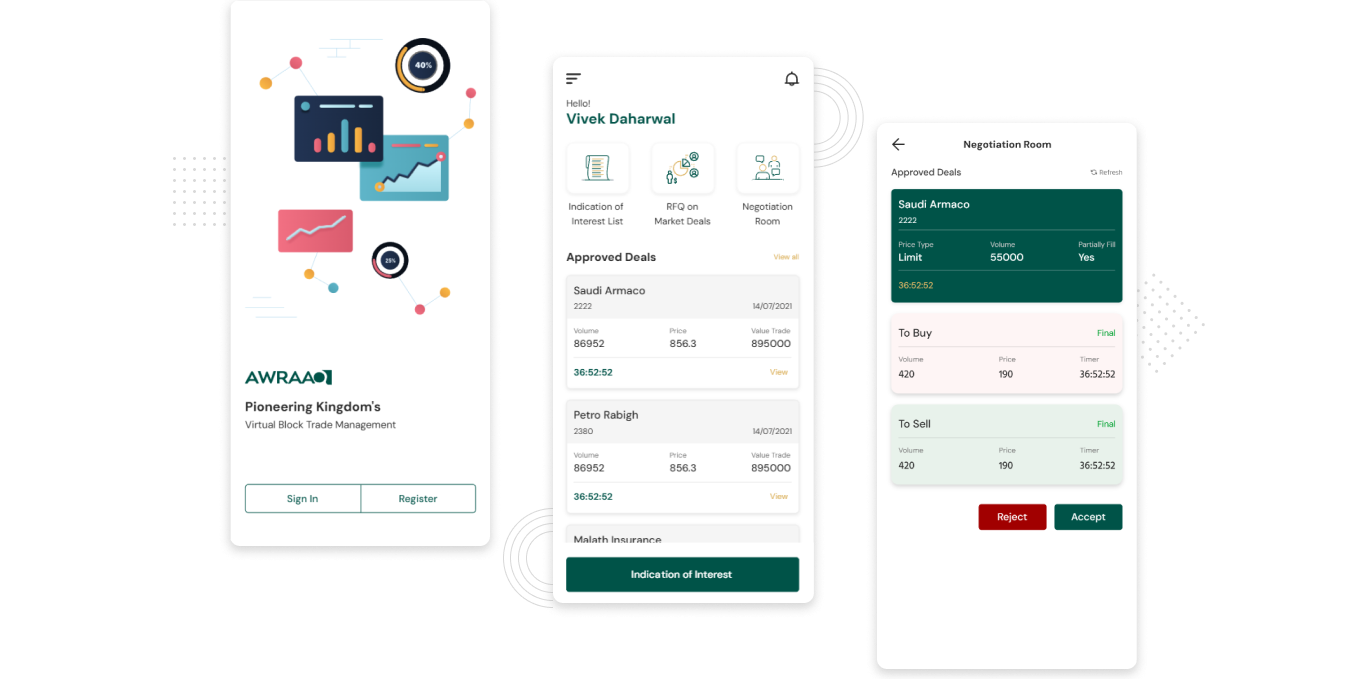
A cloud-based technology developer of block trade management systems.
Mobile Application, Finance, Stock | Visit Site
Awraaq is a specialized trading mobile application designed for the UAE stock market. The platform bridges the gap between expert brokers and individual investors. It allows the owner (a professional trader/broker) to place bids and manage trades on behalf of their clients, friends, and associates. The app focuses on bringing transparency, ease of access, and real-time tracking to the brokerage process in the competitive UAE financial landscape.
As the Lead Product Designer, I was responsible for the end-to-end UI/UX design of the mobile application. My responsibilities included conducting user research to understand the Middle Eastern financial market, creating wireframes, designing a high-fidelity visual interface, and ensuring a seamless user flow that builds trust between the broker and the investors.
July 2021 - December 2021
The UAE stock market, while lucrative, often feels inaccessible or overly complex for individual investors who lack the time or expertise to navigate professional trading terminals. Our research highlighted three critical pain points in the existing brokerage ecosystem:
To build a platform that balances professional brokerage with peer-to-peer negotiation, I deep-dived into the mechanics of the UAE stock market and the behavioral patterns of local investors. My discovery process was divided into three key phases:
I spent significant time with the Awraaq owner to understand how they manually managed trades. I mapped out the lifecycle of a "Stock Listing"—from the moment a seller decides to offload shares to the final execution on the trading floor. This helped identify that the "Negotiation Phase" was the most critical yet least transparent part of the process.
Sellers seeking maximum exit prices and buyers looking for bargain opportunities both struggle with market inactivity and volatility, yet find increased confidence through active participation. By shifting from passive observation to "skin in the game" bidding, both personas address their primary frustrations and gain a greater sense of control over their transactions.
I analyzed global trading apps and auction-based marketplaces (like eBay and specialized financial bourses). The goal was to understand how to display "Live Bids" without cluttering the mobile screen and how to create a "Negotiation Room" that feels like a secure, professional environment rather than a casual chat app.
We established that the app shouldn't just be a data dashboard; it needed to be a Transaction Enabler. Every design decision from here on was focused on making the "Bid-to-Negotiation" transition as seamless as possible.
I designed an end-to-end mobile experience focusing on transparency and user control through these key features:
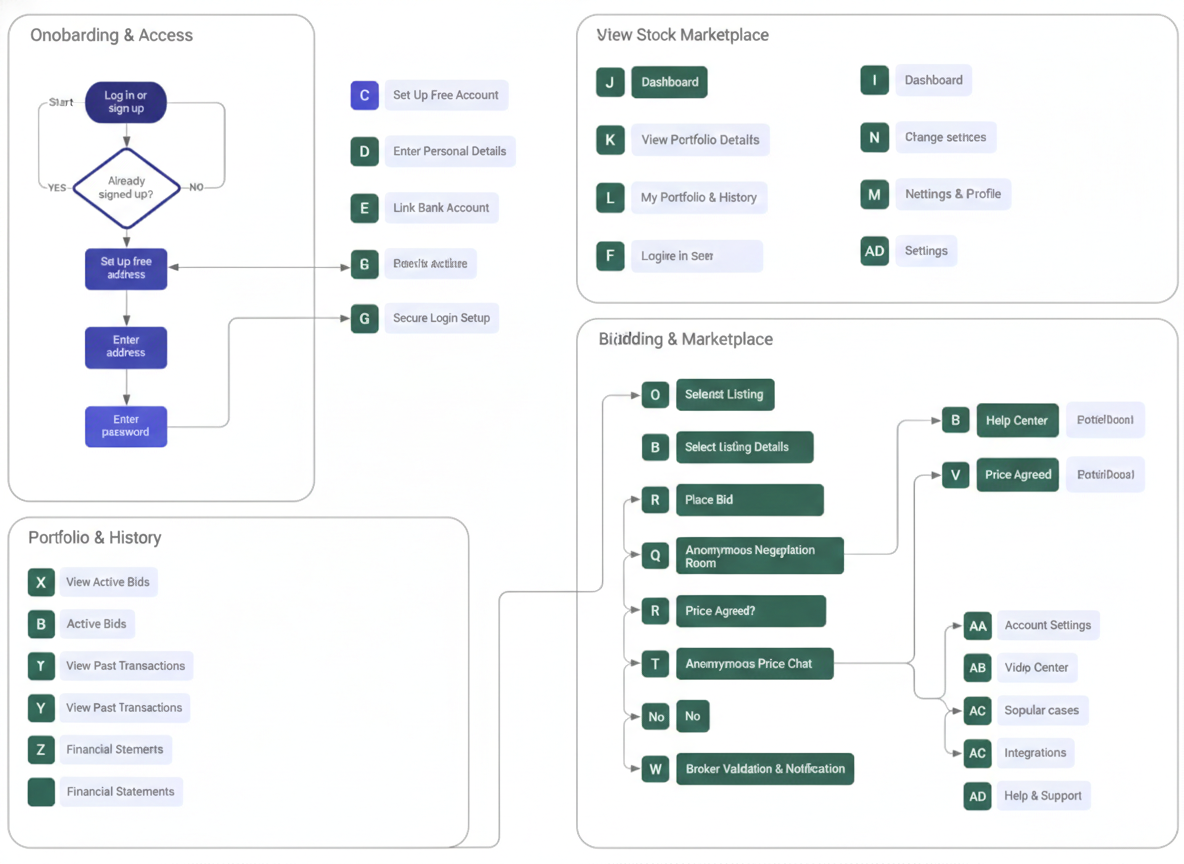
To meet the client’s urgent timeline, we transitioned rapidly from rough conceptual sketches directly to high-fidelity designs. This fast-paced approach allowed us to visualize the core "Negotiation Room" and "Bidding Engine" in real-time.
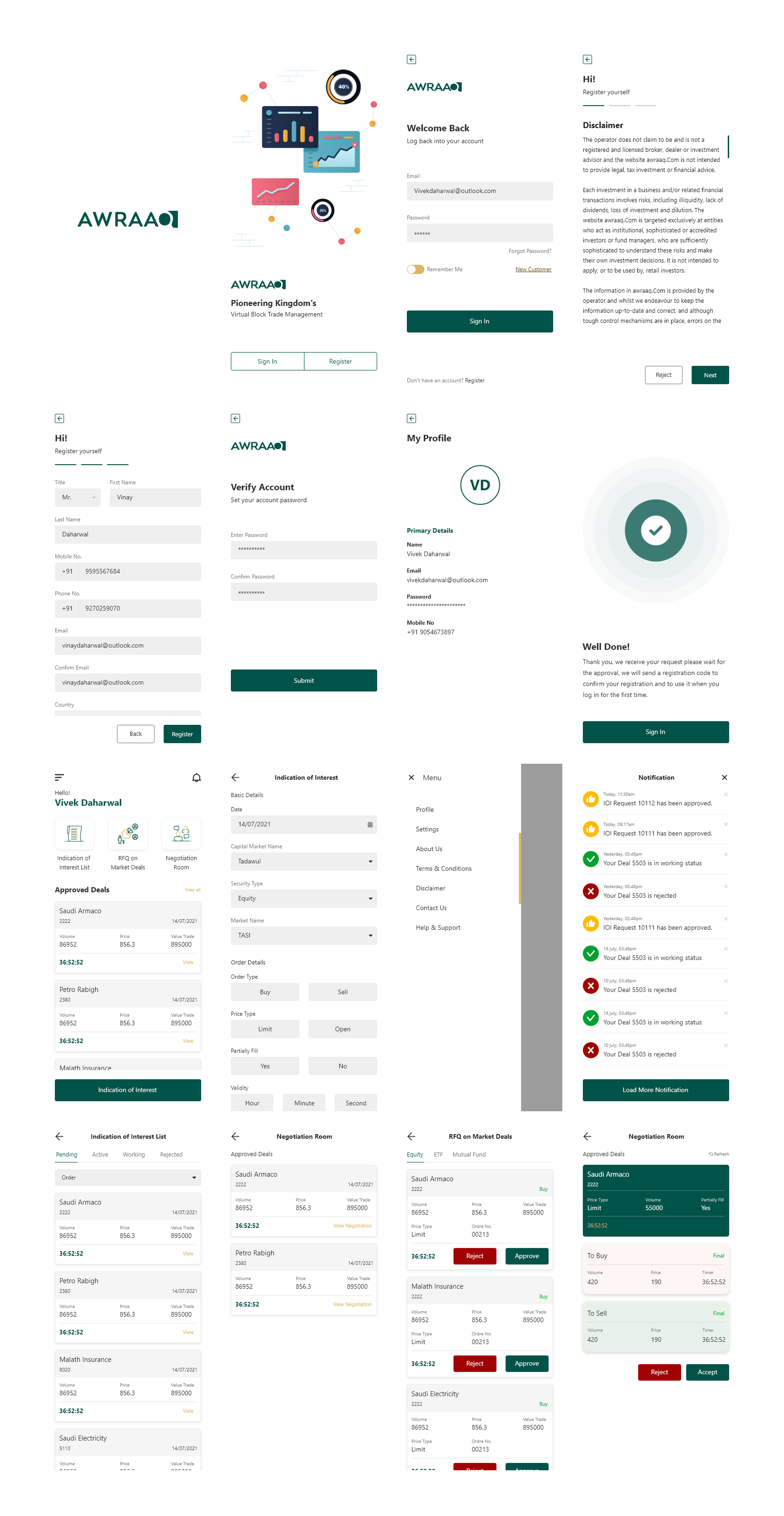
The final phase focused on delivering a developer-ready system that not only looked professional but also drove significant business growth. By automating the brokerage workflow, we achieved measurable results:
By showcasing a clear list of available stock orders, users who came to buy a single stock ended up reviewing and bidding on multiple listings, boosting overall platform activity.
The Anonymous Negotiation Room provided 100% price transparency. This clarity eliminated doubts and built a strong sense of trust between the users and the platform.
The real-time negotiation feature led to a higher volume of booked orders, as buyers and sellers could reach an agreement much faster than traditional methods.
We successfully digitized the manual booking process. What used to take hours over phone calls is now handled instantly within the app, reducing the broker’s workload and human error.
The streamlined flow significantly decreased the time taken from initial bid to final order finalization, making the entire trading cycle more agile.